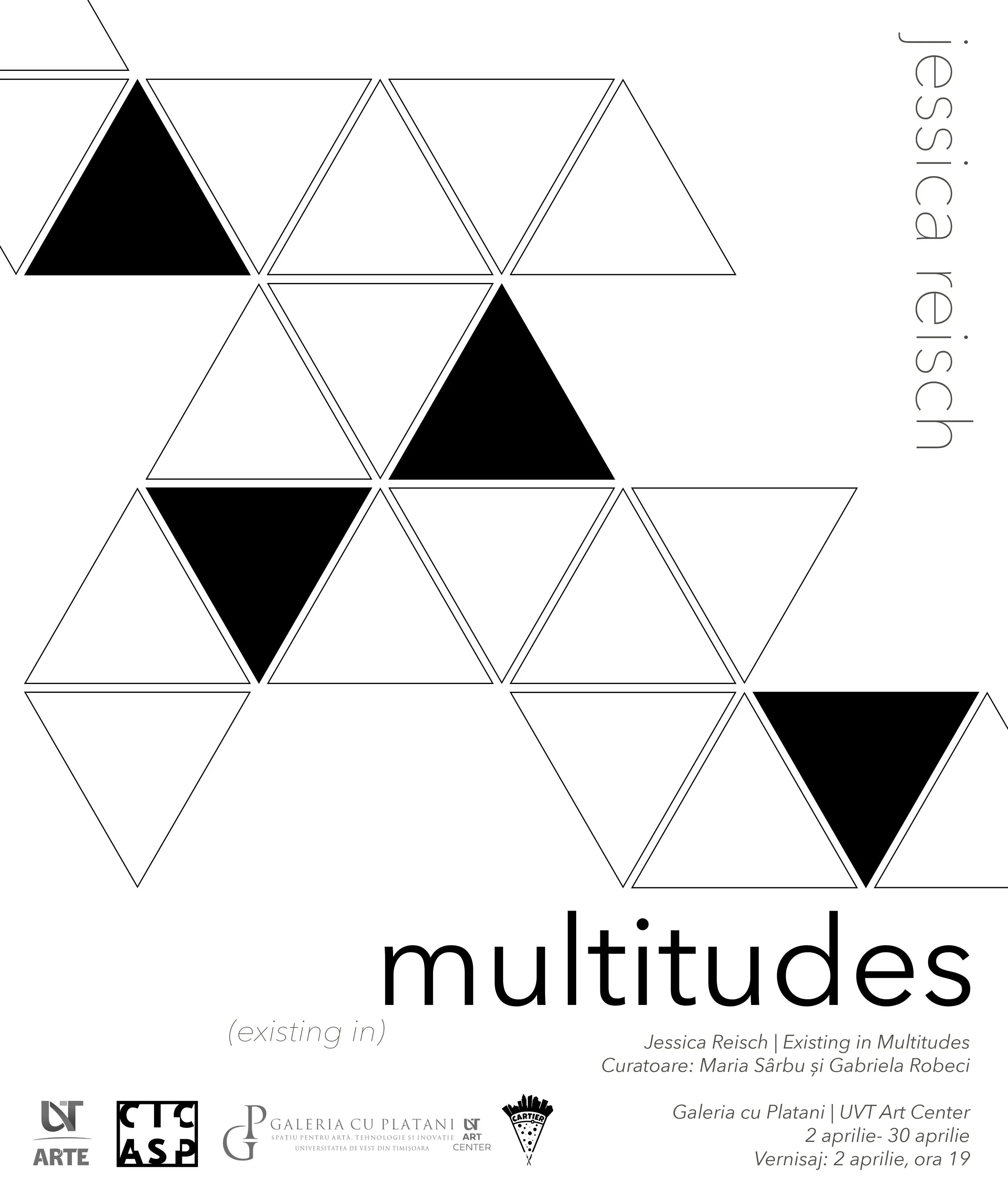
Existing in Multitudes is a multimedia, geodesic dome installation that draws on comparative biologist Andreas Hejnol’s research on tunicates (sea squirts) as a disruptor of the apical notion of evolution as a linear movement from “simple” to “complex”.
From Aristotle’s Historia Animalium to Charles Darwin’s iconic tree of evolutionary relationships, hierarchical arrangements of organisms have contributed to an anthropocentric perspective on beinghood. On the imagined evolutionary ladder, sea squirts would be at the lowest rungs, thought to be our most distant and “primitive” relatives. However, studies within the last decade have revealed that these filter-feeders are more closely related to vertebrates (including humans) than organisms with more complex morphological characteristics.
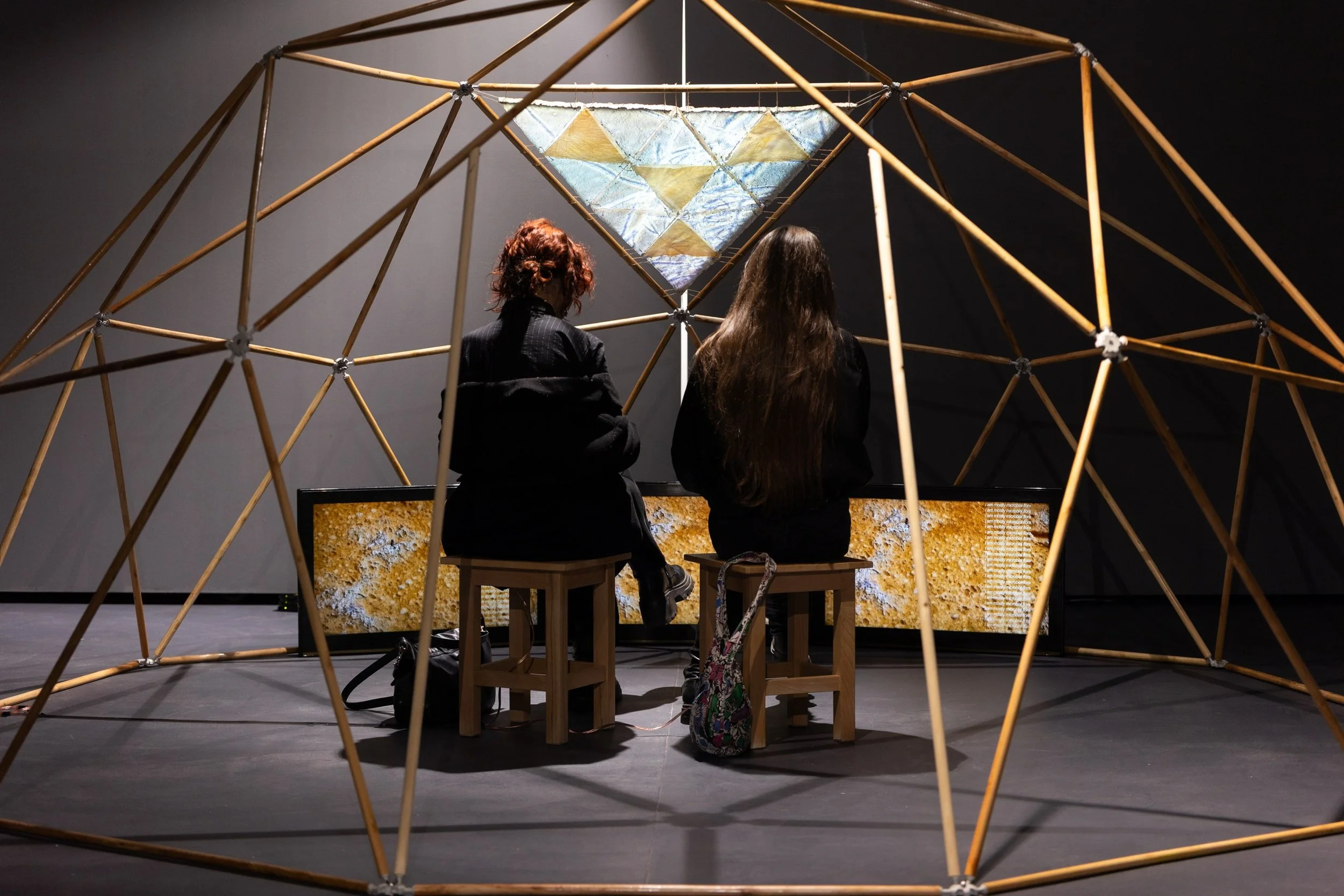
As an alternative to the hierarchical ladder, the geodesic dome is a rhizomatic structure through which we may re-conceptualize understandings of life. Dome shapes have a significant history in Indigenous cultures as forms of shelter and ceremonial spaces, and the geodesic dome was popularized in the United States in the mid-twentieth century by Buckminster Fuller as a prototype for a radical housing model.
Within the geodesic dome structure, a mosaic of mycelium and bacterial cellulose material serve as projection surface. Microscopy footage of sea squirts and fungi are projected onto the organic surfaces, offering a place to look for evolutionary insights and alternate ways of being.